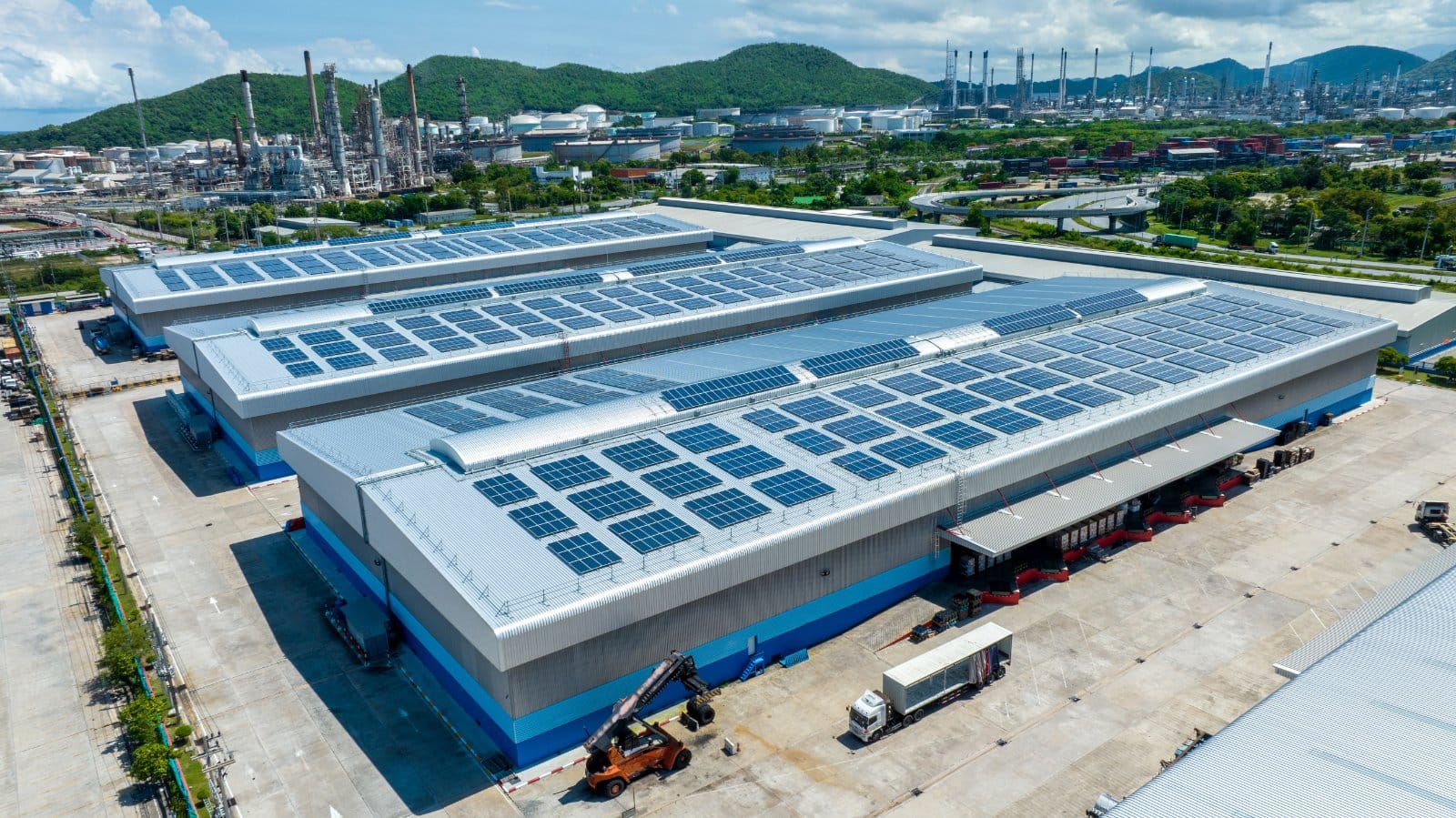
Commercial solar sits in an awkward spot in business lending, and it catches people out.
A business owner who has financed a dozen excavators assumes a rooftop system will work the same way. It often doesn’t — because the moment panels are bolted to a roof, lenders stop treating them like equipment and start asking a different question: what exactly are we holding as security here?
That single distinction drives most of what follows. Here’s how commercial solar actually gets funded in Australia, which structures suit which situation, and the questions worth answering before you sign a quote.
Why solar is financed differently to equipment
Traditional equipment finance works because the asset is identifiable, movable and re-saleable. An excavator has a serial number, a resale market and legs. If things go wrong, it can be recovered.
A solar array is different in three ways that matter to a lender:
- It becomes part of the building. Once panels, racking and an inverter are installed, they are generally affixed to the premises. An affixed asset is far harder to repossess and re-sell than a machine on a trailer — and in some circumstances it may be treated as a fixture belonging to the property rather than a standalone chattel.
- A large share of the cost isn’t hardware. Design, engineering, electrical work, grid-connection approvals, roof works and labour can be a substantial part of a commercial quote. Installation labour has no resale value at all.
- You may not own the roof. A very large number of trade and light-industrial businesses lease their premises. Financing an asset you are permanently attaching to someone else’s building raises questions no equipment lender has to ask about a ute.
None of this makes solar unfinanceable. It means the structure has to suit the situation, rather than defaulting to whatever you used for the last machine.
The realistic funding structures
| Structure | How it works | Typically suits | Watch for |
|---|---|---|---|
| Chattel mortgage | You own the asset from day one; the lender takes a mortgage over it | Owner-occupiers where the lender will accept the system as security | Whether the lender will take an affixed asset at all — many won’t |
| Commercial hire purchase | The lender owns it and hires it to you; title passes at the end | Businesses wanting fixed terms with title transfer | Same affixation question |
| Unsecured business loan | Funding based on business strength, not on the asset | Leased premises, mixed hardware-and-labour quotes, smaller systems | Costs more than secured lending — the trade-off for no security question |
| Business line of credit or overdraft | Revolving facility drawn as the install progresses | Staged installs; businesses that already hold a facility | Discipline — a revolving facility funding a capital asset can linger |
| Vendor / installer finance | Arranged through the solar company | Convenience | Compare it against an independent quote before accepting |
| Power purchase agreement (PPA) or solar lease | A third party owns the system; you buy the power it generates | Businesses that want the energy outcome without the capital | You don’t own the asset — different tax treatment, and it’s a supply contract, not finance |
The practical read: if you own your premises and the lender will take the system as security, chattel mortgage or CHP is usually the cleanest path. If you lease your premises, unsecured business lending is very often the realistic answer, and the higher cost of unsecured funds is simply what it costs to avoid an unanswerable security question.
Owner-occupier or tenant — answer this first
It changes everything downstream.
If you own the building: the system is an improvement to an asset you hold. Secured structures are on the table, and the improvement stays with you.
If you lease the building: three questions need answering before you finance anything.
- Does the lease permit it? Most commercial leases require landlord consent for anything affixed to the structure.
- What happens at the end of the lease? Does the system stay with the building, or do you have a make-good obligation to remove it — and who pays for that?
- How long is left on the term? Financing a system over five years on a lease with two years to run, and no exercised option, is a mismatch worth spotting early.
A landlord who agrees to share the cost, or to a rent adjustment reflecting the improvement, changes the sums entirely. That conversation is worth having before the finance conversation.
What actually drives the cost of a commercial system
Quotes vary widely, and the variation is usually explainable. The things that move the number:
- System size, measured in kilowatts — the single largest driver
- Panel and inverter specification, and whether the inverter is string or micro
- Roof type and condition — tin, tile, concrete or membrane all mount differently, and an aged roof may need work first
- Height and access — a two-storey warehouse costs more to work on than a single-level shed
- Electrical infrastructure — switchboard capacity, cabling runs, three-phase supply
- Grid connection — approval requirements and any network-imposed export limits
- Battery storage, if included, which is frequently a larger line item than the panels
- Monitoring, warranties and ongoing servicing
Two quotes for the same system size can differ substantially and both be honest. Compare the specification, not the headline number.
Federal and state incentives for commercial solar exist and change regularly — treat any incentive figure in a sales quote as something to verify independently against the current scheme rules rather than as a fixed discount.
The tax side
Business assets acquired for business use are generally depreciable, and the treatment depends on the structure you choose — a chattel mortgage, a hire purchase and a PPA are not treated the same way. Depreciation and write-off rules also change from year to year.
We keep the current position in our instant asset write-off guide rather than restating it here, because it moves. Confirm the treatment for your structure and your year with your accountant before you rely on it. This is general information, not tax advice.
Questions worth asking before you sign
- Do I own the roof, and if not, do I have written landlord consent?
- Is the finance structure matched to how long I’ll be in this building?
- Has the lender confirmed it will lend against an affixed asset — or is unsecured the honest answer?
- What proportion of this quote is hardware versus labour and electrical work?
- Does the roof need remediation before the system goes on it?
- Is there an export limit on my grid connection that caps what the system can actually return?
- What are the warranty terms, and who services the system — the installer, or a third party?
- Have I compared the installer’s finance against an independent quote?
Where this fits
Commercial solar is one part of a broader asset finance picture. If you are funding a solar install alongside other capital purchases, structuring them together is often more efficient than arranging each separately — and if some of the equipment is second-hand, used equipment finance has its own rules worth knowing. For what commercial asset lending generally costs and what moves the number, see equipment finance rates and costs. If your business is newer or your paperwork is light, low-doc equipment finance may be the better starting point.
Getting a commercial solar quote financed?
The right structure depends on whether you own the roof — and a lot of lenders won’t tell you that until late in the process. We’ll work out which structures are genuinely available to you before you commit.
Australian Credit Licence 506065 (Five Tees Pty Ltd) · Lender panel · ABN and low-doc options · Australia-wide
Commercial solar finance: frequently asked questions
Can you finance commercial solar in Australia?
Yes. Commercial solar is commonly funded through a chattel mortgage, commercial hire purchase, an unsecured business loan, or a revolving facility such as a line of credit or overdraft. Which structures are available depends heavily on whether you own the premises, because a solar system is affixed to the building rather than being movable equipment.
Why is solar harder to finance than other equipment?
Because it becomes part of the building. Equipment finance relies on an asset that is identifiable, movable and re-saleable. Once panels, racking and an inverter are installed they are generally affixed to the premises, which makes recovery and resale difficult — and a significant share of a commercial quote is electrical work and labour, which has no resale value at all.
Can I finance solar if I lease my business premises?
Often yes, but usually through unsecured business lending rather than secured asset finance, because you are attaching the system to a building you don’t own. You will generally need written landlord consent, and the finance term should be matched against the remaining lease term, including any options.
Is a power purchase agreement the same as financing solar?
No. Under a power purchase agreement or solar lease, a third party owns the system and you buy the electricity it generates. You are not acquiring the asset, so the tax treatment differs and the arrangement is a supply contract rather than finance.
What affects the cost of a commercial solar system?
System size in kilowatts is the largest driver, followed by panel and inverter specification, roof type and condition, height and access, electrical infrastructure such as switchboard capacity and three-phase supply, grid-connection requirements and any export limits, and whether battery storage is included.
Can a business claim a tax deduction for commercial solar?
Business assets acquired for business use are generally depreciable, but the treatment depends on the finance structure and the rules change year to year. A chattel mortgage, a hire purchase and a power purchase agreement are not treated the same way. Confirm the position for your structure and your financial year with your accountant.
Written and reviewed by the Finance Director at Tradie Finance
This article is general information only and does not constitute credit, financial or tax advice. Tradie Finance operates under Australian Credit Licence 506065 (Five Tees Pty Ltd). Lending is subject to approval, lending criteria, terms, conditions and fees.