Most trade and construction businesses reach a point where the equipment decision stops being about what a machine costs and starts being about how it is held. Leasing is one of the ways to hold it — and for some assets it is clearly the right call, while for others it quietly costs you money for years.
This guide is about that decision. It is not a product explainer: if you want the mechanics of how each lease type actually works, we have those separately in finance lease and operating lease. What follows is how to work out whether leasing your plant, machinery, tools or fit-out is the right structure in the first place.
What equipment leasing means in practice
Stripped back, leasing means you pay to use a piece of equipment for an agreed period rather than buying it outright. A financier holds the asset, you make regular payments, and at the end of the term there is a defined outcome — you hand it back, you buy it, or you roll into something newer.
The practical difference from buying is not really about the monthly number. It is about who carries the risk that the equipment is worth less than expected in four years, and who is responsible for it in the meantime. That is the question underneath every leasing decision, and it is why the same excavator can be a sensible lease for one business and a poor one for another.
Equipment leasing covers a wide span — earthmoving plant, workshop machinery, materials handling, generators and compressors, commercial kitchen and hospitality equipment, medical and dental gear, IT and point-of-sale systems, and shop or office fit-out. What the assets have in common is that they are used in the business rather than sold by it.
The real decision: lease it or own it
The case for leasing is strongest when one or more of these is true for the asset in front of you:
- It dates. If the equipment will be commercially behind in three to five years — because the technology moves, or because compliance standards shift — you are better off not holding the residual risk. Someone else can own the problem of what it is worth in 2031.
- You need it for a defined period. A machine bought for a specific contract or a two-year project does not need to be on your balance sheet forever.
- Cash is the constraint, not profitability. Leasing generally requires less capital up front than buying, which matters when the work is there but the working capital is tight.
- Uptime matters more than ownership. Where a breakdown stops the job, an arrangement that includes maintenance or makes replacement straightforward can be worth more than the equity you would have built by owning.
- You want the fleet to stay current. Businesses that win work partly on the quality of their gear often run a rolling replacement cycle, and leasing suits that rhythm.
The case for owning is strongest when the opposite holds:
- The asset has a long, useful life and holds value. Plenty of heavy plant works productively for fifteen or twenty years and still has a genuine resale market. Leasing an asset like that repeatedly can mean paying for it several times over.
- You will use it heavily and indefinitely. High-utilisation core equipment that the business is built around is usually worth owning.
- Usage restrictions would bite. Some lease arrangements carry conditions about hours, condition or how the asset is used. If you intend to work it hard, that is a real constraint.
- You want the equity. Owned plant is an asset you can sell, trade or borrow against later.
Most established businesses end up doing both — owning the core plant they run every day and leasing the equipment that dates, fluctuates with workload, or is tied to particular jobs.
Which equipment suits leasing, and which usually doesn’t
Generally suits leasing. Equipment where the technology or compliance standard moves, or where the asset is job-specific rather than core. IT systems, point-of-sale and monitoring equipment. Commercial kitchen and hospitality fit-out. Medical, dental and diagnostic equipment. Specialist attachments or machines brought in for a particular contract. Access equipment and temporary site infrastructure.
Generally suits owning. Durable heavy plant with a deep second-hand market and a long working life. Core workshop machinery that your day-to-day capacity depends on. Equipment you have already modified or fitted out for how you work. Anything you would struggle to replace quickly if a lease ended at an awkward moment.
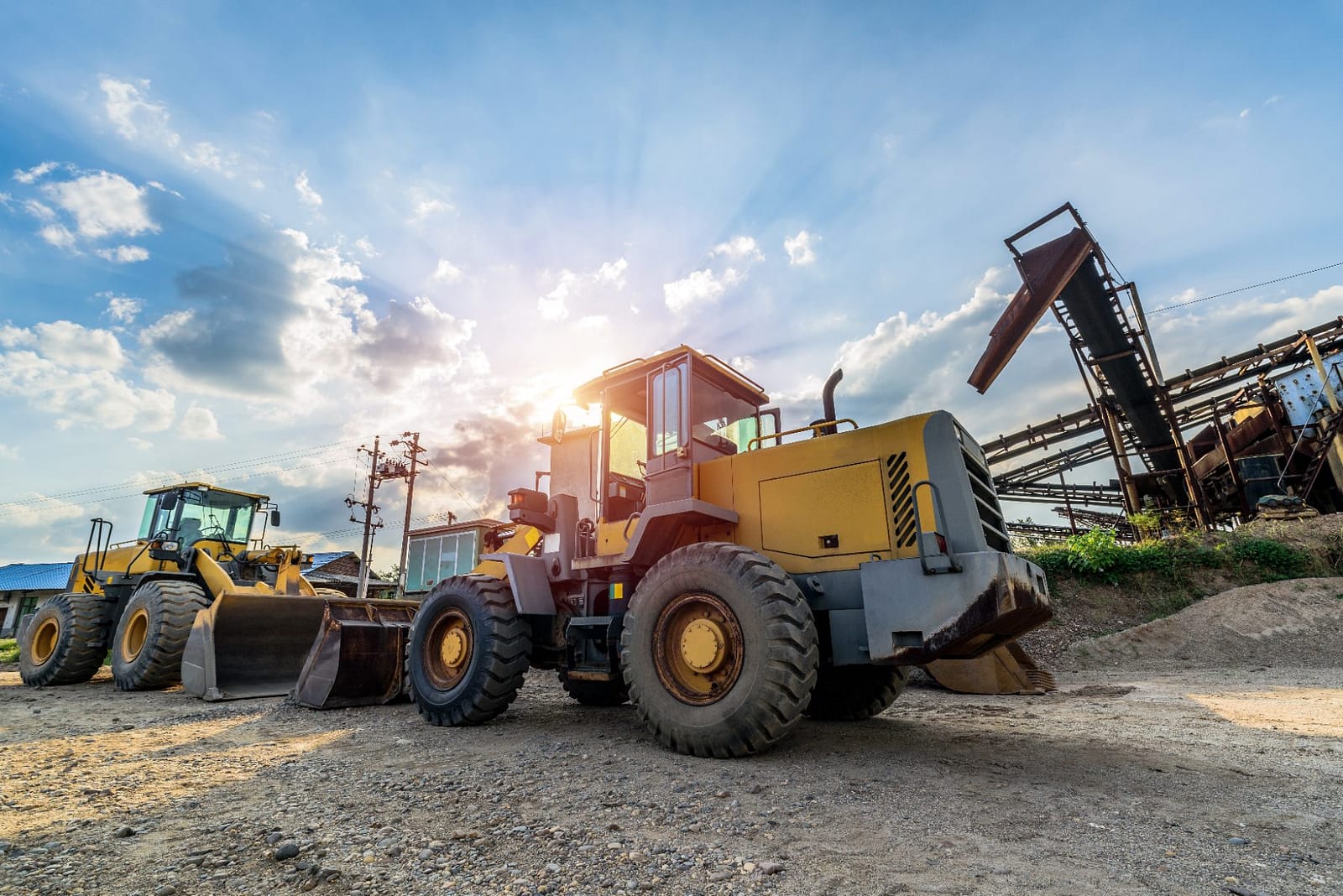
Genuinely goes either way. Mid-range earthmoving and materials handling. These hold value reasonably well, which argues for owning, but they are also the assets most sensitive to swings in workload, which argues for leasing. Here the answer usually comes from your pipeline rather than the machine: if you can see the utilisation for the next five years, owning tends to win; if you cannot, the flexibility is worth paying for.
If the asset in question is a truck rather than plant, that is a slightly different market with its own age and resale dynamics — we have covered it in truck leasing.
Leasing plant and machinery
Plant is where the leasing decision has the most money riding on it, because the sums are larger and the assets last longer.
The variable that catches people out is hours, not years. A machine’s value at the end of a term is driven far more by what it has done than by how long you have had it. A five-year lease on a machine running double shifts and a five-year lease on the same machine doing occasional work end in very different places. If a lease includes any expectation about condition or usage at handback, get specific about what that means in hours before you sign, not after.
Attachments and modifications are the second thing to settle early. Buckets, hammers, GPS systems and custom fit-outs may not be treated the same way as the base machine, and whether they are part of the lease or owned separately affects what happens at the end. It is a straightforward question that is easier to ask up front than to untangle later.
Machinery you intend to own rather than lease is funded differently again, and that decision is worth taking on its own terms rather than defaulting to whichever structure is offered first.
Tools, IT and fit-out: the smaller end
Not every leasing decision involves a six-figure machine. Workshop tooling, test and measurement equipment, IT and software infrastructure, and shop or office fit-out are all commonly leased, and the logic at this end is a little different.
Individually these items are small, but they are replaced far more often, and businesses frequently underestimate how much capital gets consumed by the steady churn of them. Bundling that churn into a structured arrangement can make it visible and predictable instead of a series of unplanned hits.
The trap at this end is term length. Leasing a laptop fleet or a point-of-sale system over a term longer than the equipment will realistically stay useful means paying for gear you have already replaced. Match the term to the working life, not to whatever produces the lowest payment.
For smaller tooling the question is usually whether a lease is worth the paperwork at all, or whether it is simpler to fund the purchase outright and keep the arrangement light.
What to check before you sign
Terms vary between financiers and between asset classes, so treat this as the list of questions to ask rather than a description of what your agreement will say:
- What exactly happens at the end of the term? Get the options in writing — return, purchase, extend, upgrade — and what each one costs.
- Who is responsible for maintenance, servicing and repairs? This differs substantially between arrangements and materially changes the real cost.
- What condition must the equipment be in at handback, and what counts as fair wear and tear for a machine that works for a living?
- Are there usage limits — hours, cycles, kilometres — and what happens if you exceed them?
- What are the insurance obligations, and who arranges them?
- What does it cost to exit early? Work being lost or a contract ending is exactly when you would want out, and exactly when it is most expensive.
- Can the equipment be relocated, sub-hired or used on another site? Relevant if you work across multiple jobs or states.
- What is the total commitment over the full term, not just the periodic payment? Ask for that figure plainly.
- How are attachments, modifications and consumables treated?
On the tax and accounting treatment of any of this — how a lease is recognised, what is claimable and when — talk to your accountant. It depends on the structure, on your circumstances and on how the agreement is written, and it is not something to take from a finance website.
End of term is where it is decided
Whether a lease was a good decision is usually settled in its final few months, not its first few.
The businesses that do well out of leasing know a year ahead what they intend to do — return the asset, buy it, or replace it — and plan around that. The ones that do badly arrive at the end of the term with no plan, and take whatever option is in front of them under time pressure, often while the equipment is still needed on a live job.
Put a note in the diary twelve months out. Decide then whether the asset has done what you needed, whether the replacement is worth having, and whether the numbers still work. If you intend to buy the equipment at the end, that is a conversation to start early rather than at the deadline.
Where this sits in your equipment finance
Leasing is one option among several, and most businesses use more than one structure across their gear. If you want to see how leasing compares with the alternatives side by side, chattel mortgage vs lease vs hire purchase sets them against each other. Commercial hire purchase covers the structure that sits between leasing and buying.
For the full picture of how equipment is funded — and to talk through which structure fits the specific asset you are looking at — start at equipment finance.
You can also model the numbers on a purchase using the equipment finance calculator before you decide which way to go.
Equipment leasing FAQs
What is the difference between equipment leasing and equipment finance?
Equipment finance is the umbrella term for the ways a business funds equipment, including leasing, hire purchase and chattel mortgage. Leasing is one of those options, and it is the one where you pay to use the asset for a term rather than buying it outright from the start.
Do I own the equipment at the end of a lease?
Not automatically. What happens at the end depends entirely on the type of lease and how the agreement is written — some arrangements include a purchase option, others contemplate returning the asset. This is the single most important thing to have in writing before you sign.
Is leasing cheaper than buying equipment?
Not usually over the full life of a long-lived asset. Leasing generally requires less capital up front and can reduce the periodic payment, but that is a cash flow benefit rather than a cost saving. Where leasing genuinely wins is on equipment that dates quickly, where avoiding the residual risk is worth more than building equity.
Can I lease used or second-hand equipment?
Often yes, though the age and condition of the asset affect what terms are available, and some financiers take a different view of used equipment than new. Older assets typically attract shorter terms. Used equipment finance covers this in more detail.
What happens if I need to end a lease early?
There is normally a cost, and it varies considerably between agreements. Because early termination tends to happen exactly when a business is under pressure, it is worth understanding the exit position before you commit rather than assuming flexibility that may not be there.
Can a sole trader or small business lease equipment?
Yes. Equipment leasing is used across the full range of business sizes, from sole traders through to large operations. What is available will depend on the business, the asset and the financier — it is not something we can pre-judge, and it is worth a conversation rather than an assumption.
Does leasing affect my ability to borrow for other things?
It can, because a lease is a commitment that other financiers will generally take into account when assessing capacity. How it is treated depends on the structure and on the lender looking at it. If you have other borrowing planned, it is worth sequencing the two rather than dealing with them separately.
Not sure whether to lease it or own it?
Tell us what the equipment is, how hard you will work it and how long you expect to need it, and we will talk you through which structure actually suits — including when the answer is that you should just buy it. We are built for tradies, but we finance every kind of business.
Apply online with Tradie Finance — or request a callback to talk it through first.
Written and reviewed by the Finance Director at Tradie Finance.
This article is general information only and does not take your objectives, financial situation or needs into account. It is not financial, tax or legal advice. All finance is subject to lender approval and to the terms of the specific agreement offered to you. Lease structures, end-of-term options, maintenance obligations and exit costs differ between financiers and asset types — read the agreement, and speak to your accountant about the tax and accounting treatment for your circumstances.