Quick answer. Equipment finance lets a business acquire plant and gear without paying for it outright, with the equipment itself as the security. The common structures are chattel mortgage, commercial hire purchase, finance lease and rental, plus low-doc options where full financials aren’t available. For South East Queensland operators, the practical question is usually less about the structure in the abstract and more about matching repayments to how work actually arrives across the year — and having the gear available when conditions allow you to use it.
Equipment finance for Brisbane and South East Queensland businesses
Most trade businesses reach the same point: the work is there, the gear isn’t, and buying outright would take the cash you need to run the job.
Equipment finance addresses that by securing the facility against the asset. Because the lender has recourse to the equipment, it is generally assessed differently from unsecured borrowing. What that means for any individual application depends on the lender, the asset and the business — including whether a business without a long trading history may still be able to obtain finance, which can come down to the lender and the asset involved.
We arrange equipment finance for businesses across Brisbane and South East Queensland — Ipswich, Logan, Moreton Bay, Redlands, the Gold Coast and the Sunshine Coast — and Australia-wide, through a panel of bank and non-bank lenders.
For the full picture of structures and eligibility, start with our equipment finance hub. This page is about what tends to be different when you’re operating in South East Queensland.
The sectors and equipment we see across SEQ
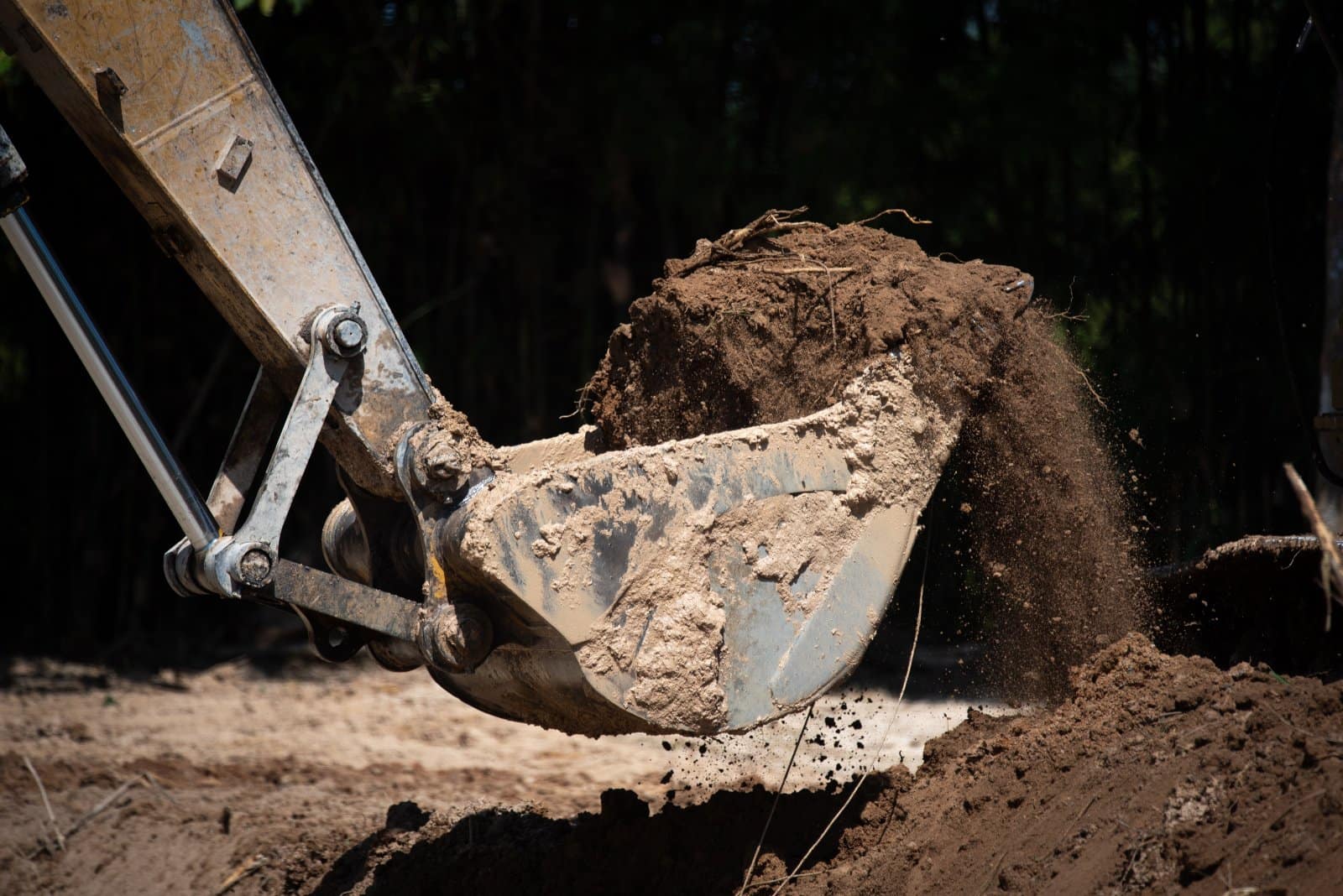
Civil and earthmoving. Civil work across the SEQ corridors — Ipswich, Logan, Moreton Bay, Redlands — tends to involve subdivision earthworks, bulk earthmoving, road and drainage. Excavators, skid steers and posi-tracks, compaction gear, tippers and float trailers. Our excavator finance page covers that asset class specifically.
Residential trades and subdivision work. Concreting, formwork, plumbing, electrical, HVAC — often a mix of vehicle and equipment finance across the same business.
Landscaping, turf and the rural fringe. Where SEQ meets the Scenic Rim, Lockyer and Somerset, the equipment mix shifts toward tractors, slashers, mulchers and attachments. See tractor finance.
Refrigeration and cold chain. Brisbane’s produce and food distribution trade supports refrigeration, cold-room and transport-refrigeration equipment.
Marine trades. Moreton Bay and the Gold Coast support marine services work — slipways, workshops, mobile servicing — with its own equipment needs.
Businesses working beyond SEQ. Some operators based around Brisbane run crews and gear well outside the region. That can change the finance picture, because utilisation and where the asset works may both affect how a lender assesses it.
What SEQ operating conditions mean for equipment finance
This is where the local picture genuinely differs, and it is worth thinking about before you sign.
Wet weather is a cash-flow consideration, not just a weather one. South East Queensland’s rainfall is concentrated in the warmer months, and civil and outdoor trades can lose working days to it. The revenue doesn’t necessarily disappear, but it can shift. That matters for equipment finance in two ways. A repayment structure built on twelve even months may not match how the income actually arrives. And if work compresses into a drier stretch afterwards, being able to take it can depend on whether the gear is already available rather than still on order.
Flood exposure affects where and how gear is kept. SEQ businesses know this well. It influences yard selection, how plant is stored and moved when a warning is issued, and what a lender or insurer may require as a condition of a facility. Requirements vary, so it is worth confirming what is expected before settlement rather than after an event.
SEQ is a spread-out market, and machine transport is a real cost. A job at Ipswich, a job on the Gold Coast and a yard on Brisbane’s northside is an ordinary week here in a way it isn’t in a denser city. Float costs influence the decision between one larger machine that travels between sites and a second smaller machine that stays put. That is an equipment strategy question before it is a finance question — but it changes what you should be financing.
How the structures compare
| Chattel mortgage | Commercial hire purchase | Finance lease | Rental / operating lease | |
|---|---|---|---|---|
| Who holds title during the term | You | Financier | Financier | Financier |
| Use and control of the equipment | Yours | Yours | Yours | Yours |
| End of term | Facility is repaid; any balloon falls due | Title transfers on the final payment | Return, extend, or deal with the residual per the agreement | Return, extend, or replace |
| Typical use case | You want ownership from the outset | You want ownership at the end | You want use without owning it | Shorter-term needs, or gear that changes quickly |
GST, tax and accounting treatment differ between these structures and are not decided by the structure alone. They depend on your GST registration, the extent to which the equipment is used for a creditable purpose, your entity, and the accounting standards that apply to your business. Don’t choose a structure on tax or balance-sheet grounds without confirming the position with your accountant.
Detail on each: chattel mortgage · commercial hire purchase · and the broader asset finance category.
If you don’t have full financials
This is common in trade businesses, particularly newer ones and those that have grown quickly. Low-doc equipment finance is assessed differently: some lenders may place more weight on the asset, ABN and GST history and trading conduct. What is required varies by lender and by application.
See low-doc equipment finance and our broader low-doc loans page.
Working out repayments
Our equipment finance calculator gives you an estimate across different amounts, terms and balloon positions. It is an estimate, not a quote — the actual position depends on the asset, the structure and the lender’s assessment.
What you’ll generally need
- ABN, and GST registration details where applicable
- Details of the equipment — make, model, age, supplier, and whether it is new or used
- Basic trading information; a full-doc application may require financial statements
- For low-doc, some lenders may consider bank statements and trading conduct instead
Also financing vehicles? Truck finance in Brisbane covers that side, and the wider business finance range sits alongside it.
Talk to us
We’re brokers, not a lender. We look at where the deal actually fits rather than pushing one product — and if equipment finance isn’t the right structure for what you’re doing, we’ll say so.
Frequently asked questions
Can I finance used equipment?
Generally yes. Age and type affect how a lender assesses it — older machines and specialised gear may be assessed more closely, and some lenders may offer a shorter term. Serial or VIN details are usually needed.
Do I need full financials?
Not always. Low-doc equipment finance is intended for businesses without a complete financial package, and some lenders may place more weight on the asset, ABN and GST history and trading conduct. Requirements vary by lender.
Can a new business get equipment finance?
It can be harder. Some lenders may consider a newer business where the applicant has relevant industry experience and the asset is a mainstream, readily resaleable type, but this depends on the lender and the application.
Is the equipment the only security?
In equipment finance the asset is generally the primary security. Depending on the lender, the amount and the structure, additional security or guarantees may be required.
Do you only work with Brisbane businesses?
No. We arrange equipment finance for businesses across South East Queensland and Australia-wide.
What can I finance?
Plant and machinery, earthmoving equipment, trailers, workshop fit-outs, refrigeration, tools and specialised trade equipment. If you’re unsure whether something qualifies, ask.
Tradie Finance operates under Australian Credit Licence 506065 (Five Tees Pty Ltd). Lending is subject to approval, lending criteria, terms, conditions and fees. Information on this page is general in nature and does not take your circumstances into account. Tax, GST and accounting outcomes depend on your circumstances — confirm your position with your accountant.